Christmas Backgrounds Scrapbook Paper: Your Festive Digital Toolkit
When the holiday season approaches, every designer and crafter knows the pressure is on to create visuals that feel both nostalgic and fresh. We often spend hours searching for the right texture, the perfect vintage pattern, or a modern geometric print that screams "celebration" without looking like a recycled greeting card from the 90s. This is where high-quality Christmas Backgrounds Scrapbook Paper becomes an invaluable asset in your creative arsenal. It is not just a collection of images; it is a curated set of textures and patterns designed to serve as the foundation for your most ambitious holiday projects.
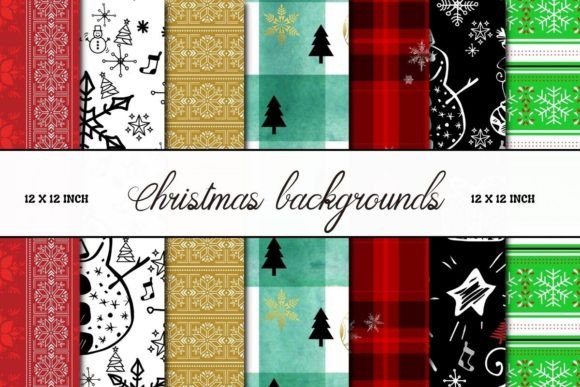
The true appeal of this specific digital paper collection lies in its versatility and resolution. We are talking about files that are 3600 x 3600 pixels at a crisp 300dpi. For the uninitiated, that translates to a perfect 12-inch by 12-inch square at professional print quality. This size is the industry standard for physical scrapbooking, but for digital creators, it offers immense flexibility. You can scale these backgrounds down for web banners without losing quality, or you can use them at full size for large-format printing like poster-sized wall art or custom wrapping paper. The visual personality of these sets typically balances festive charm with usability—think rich textures that don't overpower the text you might lay on top of them.
Practical Applications Beyond the Craft Table
It is easy to categorize this type of asset strictly under "crafting," but as a creative professional, you should look at Christmas Backgrounds Scrapbook Paper as a multi-functional design asset. For entrepreneurs and small business owners, these files are a lifesaver during Q4. Imagine you are launching a limited-edition product line. You need packaging that evokes the holiday spirit immediately. Instead of hiring a textile designer to create a seamless pattern from scratch, you can utilize these high-resolution JPGs to create custom tissue paper, box liners, or even the background for your product labels.
For content creators and bloggers, the utility extends into your digital marketing strategy. Social media algorithms favor consistency and visual appeal. Using a cohesive set of backgrounds for your Instagram Stories, Pinterest pins, or Facebook ads creates a unified brand identity during the holiday rush. If you are a publisher, consider how these backgrounds can transform the interior layout of a seasonal magazine or an e-book cover. The texture adds a tactile feel to digital pages, making the reading experience feel more premium. It is about leveraging premium font aesthetics and textures to elevate the perceived value of your content.
Integrating Textures with Typography
One of the most common mistakes in holiday design is the clash between background texture and typography. When you are working with Christmas Backgrounds Scrapbook Paper, you have to treat the background as the "supporting actor" and your text as the "lead." If the background is a busy tartan plaid or a complex vintage illustration, placing a script font or a handwritten font directly on top of it will result in a visual mess where nothing is readable.
Here is a professional tip: use these backgrounds to create contrast. If you have a dark, moody background with deep greens and reds, pair it with a clean sans serif font in white or cream. This utilizes the principles of modern typography to ensure hierarchy. The background sets the mood—cozy, festive, or elegant—while the typeface delivers the message with clarity. For example, if you are designing a "Holiday Sale" graphic for a boutique, a textured scrapbook paper background adds warmth, but you should overlay a semi-transparent shape or a solid banner behind your headline to ensure the readability of your display font.
Choosing the Right File for Your Project
When you download a set of Christmas Backgrounds Scrapbook Paper, you usually receive a zip folder containing various styles. You might find traditional plaids, abstract snowflakes, vintage postcard textures, or modern geometric holiday shapes. Choosing the right one requires an understanding of your project's specific needs. You need to evaluate the "visual noise" of the pattern.
For editorial design or long-form text, such as a holiday newsletter or a menu, choose a background with low contrast and a subtle texture. A faint linen texture or a very light snowfall pattern works best because it doesn't fatigue the eyes. Conversely, for packaging design or wrapping paper, you want high-contrast, repeating patterns that look seamless when tiled. Since these files are 12x12 inches, they are perfect for tiling in Photoshop to create an infinite pattern for printing on physical materials.
Furthermore, consider the "personality" of the brand you are working with. A luxury jewelry brand might use a background that mimics velvet or gold foil—something that suggests opulence. A family-oriented bakery might use a pattern featuring gingerbread men or hand-drawn stars. The key is alignment. The background must support the brand identity you are building. If the background feels disjointed from the brand's voice, the final product will feel amateurish, regardless of how good your logo design or headline font is.
Technical Considerations for Professional Use
While the aesthetic is important, the technical specifications of Christmas Backgrounds Scrapbook Paper are what make it a commercial font and asset solution. Because these are 300dpi files, they are print-ready. This is crucial if you are creating physical greeting cards or invitations. A common pitfall for new designers is using 72dpi web images for print projects, resulting in pixelated, blurry results. With these assets, you avoid that issue entirely.
However, you must also be mindful of file management. Since you are dealing with high-resolution JPGs, file sizes can be large. When incorporating these into a larger layout—say a complex web design mockup or a multi-page PDF—ensure you are optimizing the final export so your website doesn't load slowly or your email attachment doesn't bounce.
Finally, always review the licensing. Even though you have downloaded the files, understanding the terms of use is vital for commercial projects. Most digital paper packs allow for commercial use in physical end products (like selling a printed card) or digital end products (like a social media graphic), but they usually prohibit reselling the digital file itself as a standalone asset. Respecting these boundaries ensures you can use these beautiful design assets safely and sustainably throughout the holiday season and beyond.