Coffee Farm Patterns Backgrounds: A Designer's Canvas
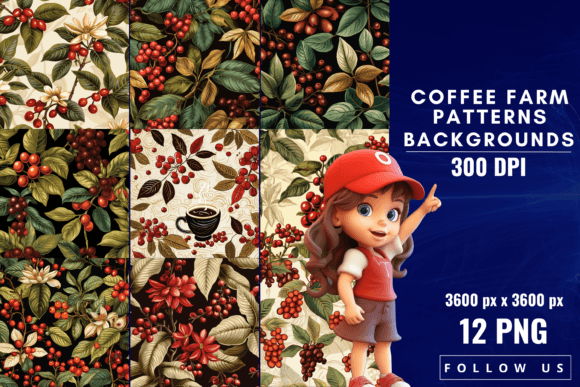
There’s a certain rhythm to a coffee farm. It’s in the orderly rows of plants stretching toward the horizon, the dappled light filtering through broad leaves, and the rich, earthy texture of the soil. Capturing that essence is the core appeal of Coffee Farm Patterns Backgrounds. These aren't just generic nature scenes; they are curated visual assets designed to bring the specific, vibrant aesthetic of coffee cultivation into your creative workflow.
Understanding the Visual Language
The personality of these backgrounds is rooted in organic complexity and structured beauty. You'll find designs that play with the contrast between the deep greens of the foliage and the warm browns of harvested beans or weathered wood. The patterns often derive their energy from repetition—the consistent geometry of plant rows, the clustering of coffee cherries, or the textured weave of burlap sacks. This creates a visual that is both naturally dynamic and aesthetically ordered. It’s a style that feels authentic, evoking a sense of origin, craftsmanship, and the journey from farm to cup.
Strategic Applications Across Projects
The true value of a design asset like this lies in its versatility. For a brand identity project in the food, beverage, or artisanal goods space, these backgrounds provide instant context and emotional resonance. Imagine them as the backdrop for a coffee roaster's logo on packaging, or as the foundational texture for a café's menu design. They communicate a story of quality and origin without a single word.
In digital design, they excel as website hero sections for agricultural blogs, online coffee shops, or farm-to-table restaurant sites. The high-resolution visuals ensure clarity on screens of all sizes, creating an immersive experience that can significantly improve user engagement. For social media graphics, they offer a ready-made, professional foundation for posts promoting new blends, behind-the-scenes farm stories, or seasonal promotions. The visual consistency helps build a recognizable feed aesthetic.
Beyond commercial use, they are powerful tools for editorial design and publishing. Think of magazine layouts about sustainable agriculture, travel features on coffee-growing regions, or cookbook sections dedicated to coffee-infused recipes. The backgrounds add a layer of depth and thematic relevance that stock photos often lack. For personal projects, such as digital scrapbooking, custom invitations for a coffee-themed event, or even as a unique desktop wallpaper, they offer a touch of personalized artistry.
Integrating into Your Design Workflow
When incorporating these patterns, consider them as a foundational layer rather than a competing element. Their richness means they pair best with clean, simple typography. A bold sans serif font for headlines can cut through the organic detail with modern clarity, while a classic serif font for body text can complement the background's earthy feel, enhancing readability. Avoid overly ornate script fonts or handwritten fonts as primary text, as they may become lost in the pattern; use them sparingly for accent quotes or logos.
Practical testing is key. Before committing, place your core design elements—logo, text blocks, key graphics—over the background at the intended scale. Check the contrast ratio to ensure text remains legible, especially if using lighter color palettes. Often, applying a subtle overlay—like a semi-transparent dark or light color layer—can help your foreground content pop while preserving the background's texture. Always review the licensing terms to confirm they align with your project's scope, whether it's for a one-time personal craft or a large-scale commercial print run.
Ultimately, Coffee Farm Patterns Backgrounds