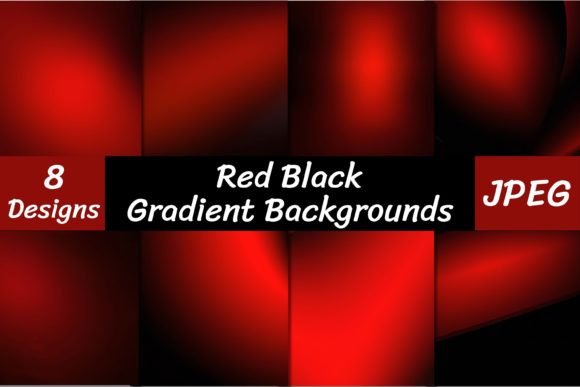
Red Black Gradient Backgrounds: Elevate Your Digital Designs
Understanding the Power of a Red and Black Palette
There is a distinct psychological weight attached to the combination of red and black. It is a palette that commands attention, suggesting power, elegance, and high contrast. When you apply this through a gradient, you move away from static, flat colors and introduce depth, texture, and movement. A red black gradient background is not just a color choice; it is a strategic design decision. It serves as a foundation that can make foreground elements pop, whether those elements are text, product images, or graphic overlays.
This specific collection of red black gradient backgrounds offers a sophisticated solution for creatives who need high-quality visuals without the hassle of complex rendering. The included files are high-resolution, 3600 x 3600 pixel JPEGs. This square aspect ratio and massive size make them incredibly versatile. You are not limited to a specific canvas size; these digital papers can be cropped, scaled, and manipulated for almost any format, from massive print banners to compact social media posts. The 300 DPI quality ensures that your work remains crisp and professional, even when printed at close range.
Practical Applications Across Industries
For graphic designers and brand strategists, understanding where these assets fit best is crucial. The aesthetic of a red and black gradient is often associated with luxury, automotive, nightlife, and technology sectors. However, its utility goes far beyond these niches. In packaging design, a gradient background can create a shelf presence that feels premium and tactile. Imagine a matte black box that fades into a deep crimson at the bottom; it immediately signals quality to the consumer.
In the realm of web design and digital marketing, these backgrounds are excellent for hero sections or call-to-action areas. The gradient draws the eye naturally, guiding the viewer toward the important information. For social media graphics, where the feed is incredibly crowded, the stark contrast of red and black stops the scroll. It provides a bold canvas for text overlays, ensuring that your message is legible and impactful against the visual noise of a busy timeline.
Enhancing Brand Identity and Visual Hierarchy
Consistency is the backbone of a strong brand identity. By utilizing a cohesive set of red black gradient backgrounds, you create a recognizable visual language across all your platforms. Whether you are designing a pitch deck, a newsletter header, or a digital invitation, using a consistent background style helps build trust with your audience. It shows that you have a curated aesthetic and attention to detail.
Furthermore, these gradients are a masterclass in creating visual hierarchy. When overlaying text, the transition from light to dark (or dark to red) allows you to place white typography in the darker areas and black typography in the lighter areas for maximum readability. This natural contrast eliminates the need for heavy drop shadows or outlines, keeping your typography clean and modern. It works beautifully with both sans serif fonts for a tech-forward look and serif fonts for a more editorial, sophisticated vibe.
Technical Specifications and Workflow Integration
One of the main hurdles with high-quality design assets is file management. These files are provided in a zipped format, which is standard for transferring large, high-resolution data. Before you begin, ensure you have an unzipping utility like WinZip or WinRAR installed. Once extracted, the JPEG format ensures maximum compatibility. You can drop these files directly into Adobe Photoshop, Illustrator, Canva, Procreate, or Affinity Designer without worrying about conversion errors.
The resolution of 3600 x 3600 pixels at 300 DPI is a deliberate choice. This size is perfect for print-on-demand products. If you are creating posters, notebook covers, or even apparel mockups, the high resolution guarantees that the gradient remains smooth without any visible banding or pixelation. For digital use, the large canvas gives you the freedom to crop in on a specific section of the gradient to create a unique texture or color focus, effectively giving you more than just eight backgrounds—you have an infinite spectrum of red and black tones to explore.
Pairing Gradients with Typography and Graphics
When working with such a bold background, your choice of foreground elements becomes critical. A common mistake is using overly busy graphics that fight with the gradient. Instead, treat the gradient as a stage. If you are working on editorial design, use plenty of whitespace—or in this case, "dark space"—to let the content breathe.
Consider pairing these backgrounds with minimalist line art or metallic textures like gold or silver foil. The contrast between the smooth gradient and a rough texture adds a tactile quality to digital work. For text, try using a modern typography style with generous letter spacing. Tight, heavy fonts can sometimes get lost in a gradient if not handled carefully. By increasing the tracking (letter spacing) and using a lighter font weight, you can maintain elegance and readability.
Final Thoughts on Asset Utilization
Ultimately, red black gradient backgrounds are about versatility. They are not just decorative elements; they are functional tools that solve the problem of "blank canvas syndrome." For the entrepreneur creating a slide deck to impress investors, or the crafter designing a digital planner, these files provide an instant upgrade to your project's perceived value. They bridge the gap between amateur drafts and professional-grade output. By integrating these high-quality assets into your workflow, you ensure that your visual communication is as strong and compelling as your message.