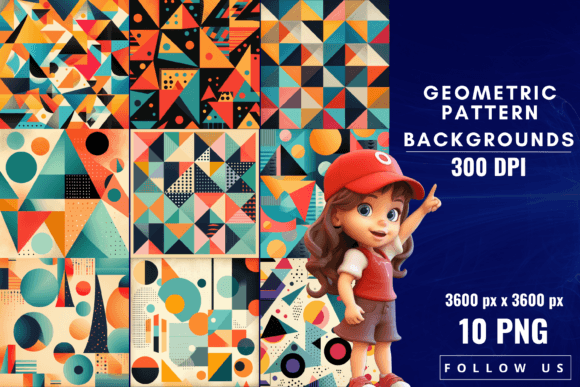
Geometric Pattern Backgrounds: A Modern Designer's Toolkit
There's a particular kind of visual energy that comes from well-designed geometry. It’s clean, confident, and inherently structured. Geometric Pattern Backgrounds tap directly into that energy, offering a versatile collection of designs built from precise lines, shapes, and tessellations. These aren't just decorative fills; they are foundational design assets that bring order and contemporary flair to a wide range of projects. The appeal lies in their balance—they are intricate enough to be interesting, yet structured enough to support content without overwhelming it.
Visual Personality: More Than Just Shapes
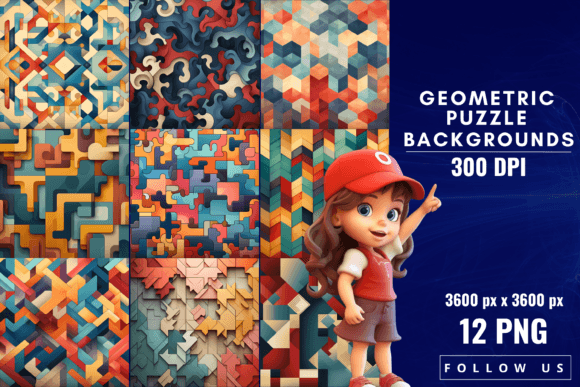
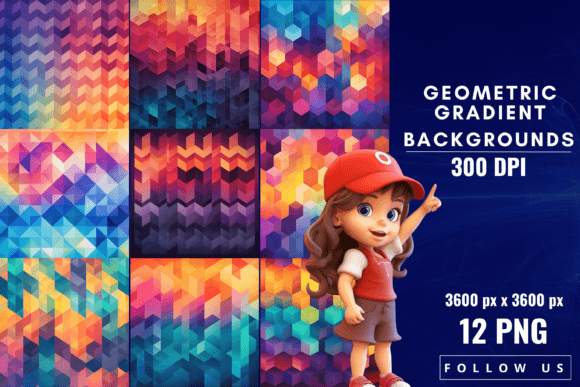
At first glance, you see triangles, hexagons, and interlocking lines. But spend a moment with these backgrounds, and a clearer personality emerges. The style leans towards modern typography sensibilities—think of it as the background equivalent of a clean sans serif font. It’s precise, forward-thinking, and avoids unnecessary ornamentation. The patterns often play with perspective, creating a sense of depth or movement. A gradient applied to a tessellated grid can feel dynamic, while a monochrome repeating motif can feel solid and trustworthy. This makes them exceptionally useful for projects that need to communicate innovation, stability, or sophistication.
The overall aesthetic is one of curated precision. It’s the visual language of architecture, data visualization, and futuristic interfaces. For a brand identity, using a geometric pattern can subtly communicate values like accuracy, innovation, and clarity. It’s a background that says, “We’ve thought this through.”
Practical Applications: Where Geometry Shines
The real strength of these backgrounds is their chameleon-like adaptability across different mediums. Their clean lines ensure they reproduce well, whether on a massive billboard or a tiny smartphone screen.
- Digital & Web Design: They are perfect for website hero sections, especially for tech startups, financial services, or creative agencies. They provide visual interest without competing with a bold headline set in a display font. Use them as subtle texture behind a pricing table or as a full-bleed background for a landing page to create an immersive, modern feel. For social media graphics, they make posts look polished and professional instantly.
- Presentation & Editorial Design: A slide deck with a consistent geometric background looks cohesive and intentional. It elevates a standard PowerPoint into something that feels like it came from a design studio. In editorial design, think of magazine feature headers or chapter openers where a geometric pattern can frame a title beautifully.
- Branding & Marketing: Beyond logos, these patterns can become a core part of a brand’s visual system. Imagine them on business cards, letterheads, or product packaging design. A cosmetics brand might use a soft, pastel geometric pattern for a feminine, modern look. A tech gadget company might use a sharp, high-contrast pattern on its box to convey cutting-edge innovation.
- Print & Craft Projects: The applications extend into the physical world. Use them as backgrounds for printable planners, journal inserts, or custom stationery. For crafters, they can be printed on fabric for tote bags or pillows, offering a contemporary alternative to floral or paisley designs.
Making Them Work: A Practical Guide
Having a great asset is one thing; using it effectively is another. Here’s how to integrate these backgrounds into your workflow without a hitch.
Choosing the Right Pattern for the Job
Not every geometric pattern suits every project. Consider the mood. A pattern of soft, overlapping circles in muted tones works well for a wellness brand’s Instagram story. A sharp, black-and-white grid of triangles might be perfect for a music festival poster or a portfolio site for a graphic designer. Always ask: does the pattern’s personality match the message I need to send?
Testing with Your Core Assets
This is non-negotiable. Before you commit, layer your primary content over the background. How does your chosen typeface interact with it? A highly ornate script font might get lost against a busy, high-contrast pattern. A sturdy serif font or a bold sans serif font will often hold its ground better. Check the font pairing—does the combination of your headline and body copy remain clear and readable? The background should support your typography, not fight it. This is a crucial step in maintaining readability and a clear visual hierarchy.
Considering Licensing and Formats
For any commercial project—from client work to products for sale—you need to ensure the asset comes with a proper commercial font or asset license. Most reputable sources for premium font files and backgrounds will clearly state the terms. Also, consider the file formats. Vector formats (like SVG or AI) are ideal for infinite scalability without quality loss, perfect for large-format printing. High-resolution raster files (like PNG or JPG with transparent backgrounds) are essential for digital work and layering in design software.
Using Them for Visual Consistency
One of the biggest professional advantages of using a cohesive set of Geometric Pattern Backgrounds is the consistency it brings. You can use variations of the same pattern family across a campaign—perhaps a denser version for print, a lighter version for the website, and an animated version for video. This repetition builds brand recognition and makes your entire project feel unified and professionally executed. It’s a simple trick that significantly boosts audience engagement by creating a familiar and trustworthy visual environment.
Ultimately, these backgrounds are more than just pretty patterns. They are a strategic tool. They provide a foundation of modern elegance and structured energy that can elevate a project from good to exceptional. By understanding their visual language and applying them thoughtfully, you give your work a layer of polish and intention that audiences instinctively recognize and respect.