Sky Blue Watercolor Texture Backgrounds: A Designer's Guide
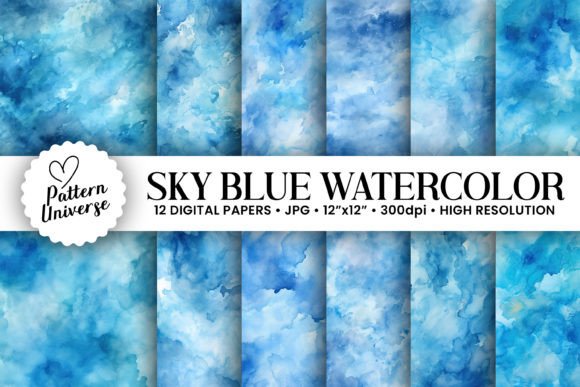
There's an immediate, almost tactile quality to a well-executed watercolor texture. It doesn't just sit on the screen or page; it breathes. The Sky Blue Watercolor Texture Backgrounds collection captures this perfectly. It's not a flat, digital blue, but a dynamic wash of color with visible paper grain, subtle pigment pooling, and the gentle, unpredictable bleeds that give traditional watercolor its soul. This isn't just a background; it's a starting point for a mood, a feeling of calm clarity and handcrafted authenticity.
Visual Character and Stylistic Personality
The core appeal lies in its balance. The sky blue palette is inherently versatile—evoking serenity, trust, and openness without being cold. The texture adds layers of visual interest: delicate brushstrokes, soft gradients that shift from airy to saturated, and minute imperfections that prevent any sense of sterile perfection. This combination gives it a unique personality. It feels both modern typography and timeless, professional yet approachable. It's a creative font for your backgrounds, offering the sophistication of a curated design asset with the warmth of a handmade element.
Unlike a bold display font or a structured sans serif font, this background works behind the scenes. Its role is to support, not shout. It provides depth and context, allowing foreground elements—whether they are crisp serif font headlines, playful script font quotes, or clean logo designs—to truly pop. The texture's complexity means it can handle this supporting role without becoming boring; there's always a new detail for the eye to discover upon closer inspection.
Practical Applications Across Creative Projects
Where does this background truly excel? Think beyond the obvious. Its high-resolution 300dpi files and 12x12 inch dimensions make it a powerhouse for both digital and physical projects.
- Branding & Marketing: Use it as a subtle backdrop for social media graphics to add depth to quote posts or product features. It can soften a website hero section, making tech or service-based brands feel more human. For packaging design, it lends a premium, artisanal quality to labels and boxes.
- Publishing & Editorial Design: In book covers, especially for genres like contemporary fiction, memoirs, or wellness guides, it sets a reflective tone. For editorial design, it can be a beautiful background for pull quotes or chapter openers in magazines and lookbooks.
- Craft & Print Projects: This is where the collection's included variety shines. Having 12 distinct textures allows for coordinated yet varied projects. Imagine using one texture for the main gift wrapping, another for the matching greeting card, and a third for the invitation insert. It's perfect for scrapbook pages, tumbler wraps, and custom stationery that feels cohesive and professionally designed.
Working With Watercolor: A Practical Approach
Integrating textured backgrounds effectively requires a bit of strategy. The goal is to leverage their beauty without compromising the clarity of your message.
Ensuring Readability and Hierarchy
The most critical step is testing your foreground text and graphics against the background. A densely textured area can compete with text. Use the font pairing principle of contrast here: place a strong, clean typeface—a bold sans serif font or a high-contrast serif font—over a softer, less detailed section of the watercolor wash. You can also add a semi-transparent shape (like a white or light blue rectangle with reduced opacity) behind your text to guarantee legibility while letting the texture show through. This maintains the visual hierarchy, ensuring your headline is read first, followed by supporting copy.
Evaluating Fit and Font Pairings
Not every project calls for a watercolor background. Ask yourself: does the mood of this texture align with my brand identity? It's ideal for brands that want to communicate creativity, approachability, and calm confidence. Avoid pairing it with overly grungy or aggressive display fonts, which can create visual dissonance. Instead, pair it with fonts that echo its refined yet natural feel—a clean geometric sans serif font for modernity, or an elegant serif font for classic sophistication. A delicate script font can work beautifully for accents, but ensure it remains readable.
Leveraging the Included Assets
The value of this collection is in its completeness. Don't just use one texture and ignore the others. Review all 12 digital papers. Some will have more pronounced brushstrokes, others will be softer washes. Some might have a warmer or cooler blue undertone. This allows you to create a system: use a bolder texture for a hero image, a softer one for a background pattern, and another for a subtle border. This kind of thoughtful application elevates your work from simply using a background to implementing a cohesive design asset strategy. It demonstrates a level of care that strengthens professional perception and audience engagement.
Ultimately, these backgrounds are tools for storytelling. They provide a ready-made layer of texture and emotion that you can build upon. By understanding their visual strengths and applying them with intention, you can create work that feels both polished and personally crafted, resonating with a audience that values quality and authenticity. The included commercial license makes this a versatile asset for any creative's toolkit, ready to be deployed across client work and personal projects alike.